

Why No Child Should Live in Poverty: A Journey Through the Amazon, Ghana, India, and Nepal
- Agnius Vaicekauskas

- Jun 12
- 7 min read

Poverty is a thief, stealing childhoods, dreams, and the joy of being young. Through my travels in the lush depths of the Amazon, the resilient communities of Ghana, the bustling markets of India, and the vibrant streets of Nepal, I’ve met children whose hope and strength shine despite their struggles. Their stories, captured in fleeting moments, have left an indelible mark on my heart. No child should grow up in poverty—not in a world so full of possibility. Join me on this journey to understand why this injustice must end and how poverty impacts not just their lives but their developing brains and sense of self-worth.
The Amazon: Innocence in Isolation

The Amazon rainforest is a world of breathtaking beauty, its green canopy hiding both wonder and hardship. In a village along the Rio Negro, I met Maria, a young girl who helped her family fish and gather fruit. Her small hands moved with skill, but her future was uncertain—the nearest school was a day’s boat ride away, a journey her family couldn’t afford.
The air was thick with humidity, the river’s surface mirroring towering trees. Maria’s laughter echoed as she showed me how to cast a net, but her eyes dimmed when I asked about school. She spoke of wanting to read stories like the ones her older cousin shared, but books were a luxury, and education a distant dream.


In the Amazon, poverty isolates. Many indigenous children like Maria lack access to healthcare and education, with poverty rates in some regions exceeding 50%, according to UNICEF. Poverty disrupts critical developmental stages, limiting cognitive growth and emotional resilience. Studies show that children in poverty experience chronic stress, which elevates cortisol levels, impairing the prefrontal cortex—the brain region responsible for decision-making and learning. This neurological toll can hinder academic performance and future opportunities. Moreover, the lack of resources and social exclusion can erode self-worth, leaving children like Maria feeling invisible in a world that seems to have forgotten them. These children deserve more than survival—they deserve a future.
Lithuania: The Power of Presence
During my travels of self-discovery, I found myself back in Lithuania, volunteering and then working at a center for delinquent children in Klaipėda. These kids, often misunderstood and marginalized, carried heavy burdens—poverty, broken homes, and societal stigma. Yet, in a small room filled with laughter and shared stories, I learned that sometimes giving your time matters more than anything else. The simple moments of connection showed me the power of presence.
In Lithuania, many children in such programs face poverty and social exclusion, with over 20% of children at risk of poverty, according to local studies. Economic hardship often correlates with youth delinquency, as financial strain disrupts family stability and access to support. Poverty’s impact on the developing brain is profound: chronic stress from food insecurity or unstable housing can alter the amygdala, heightening emotional reactivity and impulsivity. This can manifest as behavioral issues, further stigmatizing these children and diminishing their self-esteem. Spending time with them taught me that presence—listening, playing, being there—can plant seeds of hope, reminding them they are seen and valued.
Ghana: Resilience in the Face of Hardship
In Ghana, West Africa, the warmth of community is unmistakable, yet poverty casts a heavy shadow. In a village near Takoradi, I met Kofi, a boy of about nine, carrying water jugs to support his family. To my surprise, well-spoken English. His curiosity and laughter were contagious, but his young shoulders bore burdens no child should carry.
The village pulsed with life—women pounding yam, children playing with makeshift toys. Kofi balanced a heavy jug on his head, his smile unwavering as he shared his dream of becoming a doctor. When I asked about school, he shrugged; his family needed his help more than the classroom did.
In Ghana, over 28% of children live in poverty, often working instead of attending school, per UNICEF. Poverty forces children like Kofi into adult roles, stunting their developmental milestones. The constant pressure to contribute economically can disrupt the hippocampus, a brain region critical for memory and learning, leading to poorer academic outcomes. Additionally, the societal expectation to prioritize survival over personal aspirations can undermine self-worth, making children feel their dreams are unattainable. Kofi’s resilience was inspiring, but his childhood was being eroded by necessity. Every child deserves the chance to learn, play, and dream.


India: The Weight of Survival
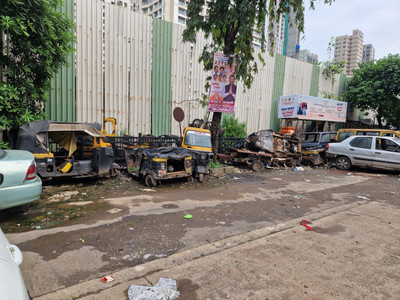
India’s vibrant energy is overwhelming—colors, sounds, and stories collide in every corner. In the slums of Mumbai, I met Ravi, a ten-year-old boy selling flowers in chaotic streets. His bare feet danced over scalding pavement, his quick grin hiding a day without food.
The market was a kaleidoscope of saris and spices, with horns blaring and vendors shouting. Ravi darted between stalls, his small voice offering marigolds, his eyes scanning for the next sale. When I bought a flower, he beamed but later admitted he hadn’t eaten since the previous day.
Over 30% of India’s children face multidimensional poverty, missing out on education, safety, and play, according to UN data. The relentless demands of survival, like those Ravi faced, trigger chronic stress that can shrink the brain’s gray matter, impairing cognitive flexibility and problem-solving skills. This neurological burden compounds the emotional toll: children in poverty often internalize their struggles, feeling unworthy of better circumstances. Ravi’s flowers weren’t just wares—they were his lifeline. How can we accept a world where children must hustle to survive?


Nepal: A Smile Amidst the Struggle

In a Kathmandu slum, beneath the towering Himalayas, I met Anjali, an eight-year-old girl. Her home was a fragile patchwork of tin and tarp, yet her smile rivaled the brightness of the prayer flags fluttering nearby. Clutching a tattered notebook, she declared, “I want to be a teacher,” her voice steady despite her hunger.
The air carried the scent of incense and dust, with temple bells chiming faintly. Anjali’s small hands traced letters in her notebook, each stroke a quiet act of defiance against her circumstances. Her determination moved me, but her reality was stark—she often skipped school to fetch water.
In Nepal, over 25% of Nepalese children live below the poverty line, often forgoing school for work or water-fetching, per UNICEF. Poverty’s impact on brain development is particularly acute during early childhood, when neural connections are forming rapidly. Malnutrition and stress can reduce synaptic density, impairing language development and emotional regulation. For Anjali, the lack of consistent schooling—in her case, no schooling—and societal validation threatened her self-worth, yet her resolve showed the power of hope. This isn’t just a statistic—it’s a stolen childhood.
Their future is heartbreakingly uncertain. For many children in Nepal, poverty doesn’t just mean hunger or missed school—it marks them as vulnerable targets. With no safety nets, they are often groomed or coerced into child labor, swept into the machinery of human trafficking, or exploited by sex tourism networks that prey on desperation. Instead of learning, they are surviving. Instead of dreaming, they are disappearing.

Why This Matters—And What We Can Do
These children are not statistics. They are beating hearts, radiant with potential, dimmed too soon. They are the soul of our shared humanity—millions of young lives whose laughter is silenced before it ever finds its rhythm. Childhood, for them, is not a time of wonder but of worry and survival. In the breathless heat of the Amazon, the rust-colored soil of Ghana, the teeming alleys of Mumbai, and the wind-scoured hills of Nepal, I have walked roads that tourists never see—roads where dreams are traded for food, where play is replaced by labor, and where innocence is a luxury few can afford.
Poverty is not just an economic condition—it is a full-body captivity. It infects the nervous system, rewiring young minds to expect disappointment, to flinch from hope. It erodes self-worth so thoroughly that many children never dare to imagine a life beyond their suffering. They grow up believing they are less—less valuable, less deserving, less human.
Some of them go their entire lives never discovering the fire that lives inside them. They are told, in a thousand silent ways, that their dreams are too expensive, too wild, too far.
But their lives are not beyond reach. They are not lost causes. What they need is not more sympathy but more solidarity.
Empathy is not enough. Awareness is not enough. Action—real, sustained, unapologetic action—is the only language poverty understands. And we must learn to speak it fluently, now.
Here’s how to begin:
Support education: Back frontline organizations like Save the Children or local heroes in the Amazon, Ghana, India, and Nepal who provide scholarships, safe schools, and basic tools like books and uniforms—lifelines disguised as backpacks.
Be an Advocate: Share their stories. Let your voice echo where silence has ruled. Pressure policymakers. Join campaigns that demand dignity for every child.
Give Your Time or Fundraise: Partner with trusted groups delivering meals, mentorship, and medical care. Host fundraisers that turn celebration into transformation.
On my journey, I’ve walked into villages where maps give up—places too forgotten to measure, too quiet for headlines. And yet, in these shadows, I’ve found the brightest light. Maria, whose silence said more than speeches ever could. Kofi, whose laughter cracked through the heaviness of hunger. Ravi, whose determination burned hotter than the sun on the streets of Mumbai. And Anjali—ten years old, all courage and fire, teaching me what it means to stand tall when the world has tried to shrink you.
Their faces don’t leave me. Their stories have reshaped my soul and rewritten my mission.
I gave what I could—everything, in fact. The savings I brought to India, the time I carried in my bones, the clothes off my back, the presence of my heart. Still, I know it’s not enough. That’s why I’m planting the seeds of something new. Not a charity—a commitment. A living project born from proximity, built with intention, and designed to reach children who the world has overlooked. I’ve never run a fundraiser before. But I know where the money should go. Because I’m here, on the ground in Nepal, seeing it with my own eyes and holding it in my hands.
This isn’t a call for pity—it’s a call for partnership. If your cup is full, let it overflow. That overflow can become a river. A school. A meal. A future. A movement.
No child should grow up believing they are less than sacred. Their laughter, their dreams, their brilliance—they are not just worth saving. They are worth everything.
If you willing to help me build this?
For them. For what’s possible. For the world we know is still within reach.
No pressure just what you can.




Comments